
Golden Falcon Energy Logo
Why Gold and Precious Metals Have Become More Important in 2026
Precious Metals

Why Gold and Precious Metals Have Become More Important in 2026

An industry analysis covering gold, silver, platinum and palladium price dynamics, central bank demand, ETF flows, industrial consumption and strategic outlook for 2026.

July 25, 202612 min read
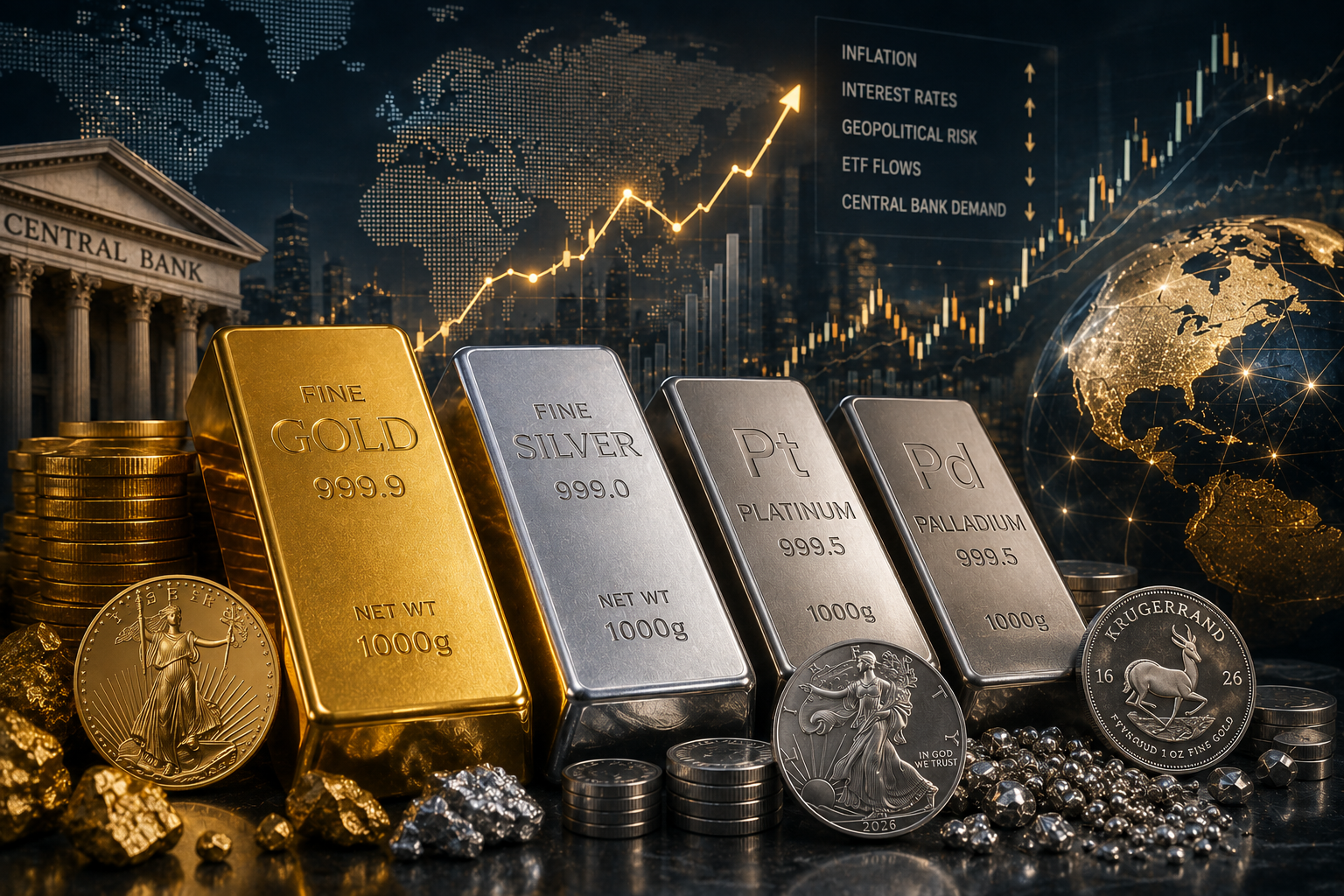
Executive Summary In 2026, precious metals are no longer just "safe-haven" assets. Gold, silver, platinum and palladium are now driven by a complex mix of macroeconomic policy, geopolitical risk, ETF flows, central bank demand and industrial cycles. After a strong rally followed by a sharp correction, the market has entered a phase of digestion rather than structural weakness. Gold remains the core global risk barometer, while silver increasingly acts as both an industrial and investment-sensitive asset. Platinum and palladium, meanwhile, add a distinct industrial-demand layer to the complex, shaped by automotive consumption, emissions technology and supply concentration. Overall, the precious metals market in 2026 reflects a new regime of higher volatility, multi-layered demand and structurally persistent strategic interest from global institutions. For physical traders and OTC structures, pricing in this environment is no longer purely chart-driven — it is also dependent on flows, inventory levels, liquidity conditions and overall market sentiment.

1. The New Precious Metals Landscape in 2026

1.1 A Market Defined by Multiple, Simultaneous Forces The precious metals market in 2026 is no longer just a "safe-haven" space. It has evolved into a complex pricing system where multiple macroeconomic, geopolitical, monetary and physical supply-demand forc...

1. The New Precious Metals Landscape in 2026
1.1 A Market Defined by Multiple, Simultaneous Forces The precious metals market in 2026 is no longer just a "safe-haven" space. It has evolved into a complex pricing system where multiple macroeconomic, geopolitical, monetary and physical supply-demand forces interact simultaneously. Gold, silver, platinum and palladium have once again demonstrated in the first half of 2026 that they can function both as defensive assets during periods of uncertainty and as highly sensitive instruments reacting to: • Interest rates • The US dollar • ETF flows • Central bank purchases 1.2 From Rally to Digestion, Not Structural Weakness World Bank data shows that precious metal prices retreated in Q2 2026 compared with the previous quarter, yet the overall precious metals index still reflects strong annual growth. This suggests that the market, after a sharp rally, has entered a phase of digestion and rebalancing rather than a structural reversal into sustained weakness. According to the World Gold Council's mid-year report, gold surged above $5,500 per ounce in early 2026 before correcting toward the $4,000 range. Such a wide trading range indicates that the market is operating in a new volatility regime, where every shift in real yields, Federal Reserve expectations or geopolitical tensions can trigger a new wave of repricing. 1.3 Why This Matters Beyond "Fear" The importance of 2026 lies in the fact that the market no longer reacts only to fear. Instead, it responds to a combination of: • Fear and risk sentiment • Monetary policy expectations • Capital flows • Physical supply-demand equilibrium This behavior is highly relevant for physical traders and OTC structures, because pricing in such an environment depends heavily on flows, inventory levels, liquidity conditions and overall market sentiment — not chart patterns alone.

2. Gold: Still the Core Safe-Haven Anchor of the Global System

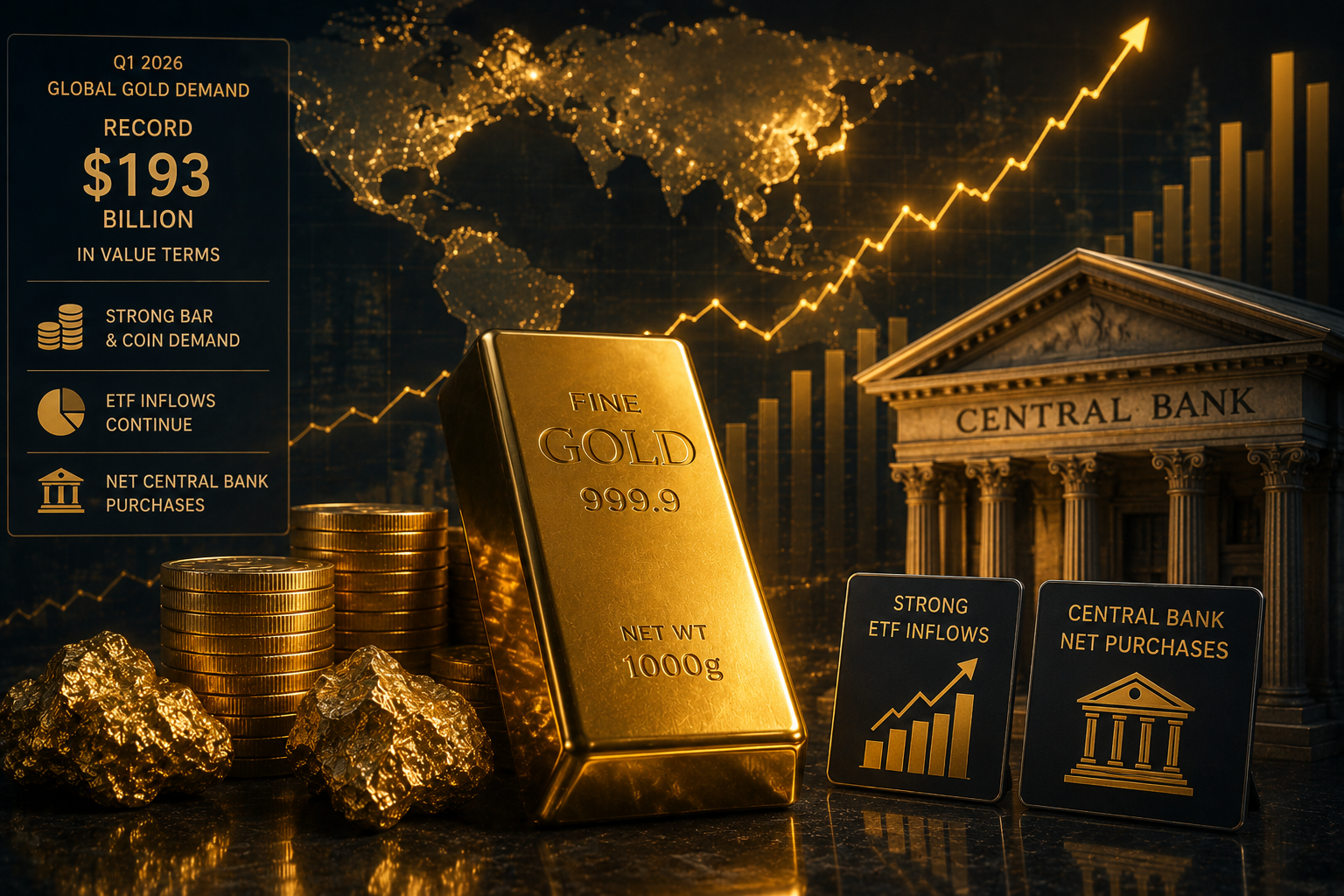
2.1 Record Demand Across Multiple Channels Gold remains the primary reference asset for measuring systemic risk in 2026. The World Gold Council reports that in Q1 2026, global gold demand reached a record $193 billion in value terms, while bar and coin deman...
2. Gold: Still the Core Safe-Haven Anchor of the Global System
2.1 Record Demand Across Multiple Channels Gold remains the primary reference asset for measuring systemic risk in 2026. The World Gold Council reports that in Q1 2026, global gold demand reached a record $193 billion in value terms, while bar and coin demand remained strong. At the same time, ETF inflows and net central bank purchases continued to provide structural support to the market. In simple terms, when retail investors, ETF institutions and central banks move in the same direction, gold is no longer driven by a single narrative — it is supported by multiple aligned capital flows. 2.2 Central Banks Remain Structural Buyers A key structural point is that central banks are still accumulating gold in 2026, although the pace of purchases may have moderated compared with earlier peak periods. The World Gold Council's latest survey shows that: • 89% of central bankers expect global gold reserves to increase over the next 12 months • 45% expect their own institution to increase holdings Reuters has also highlighted that central bank demand remains a critical support factor for the market, even as net purchases have slightly slowed from previous highs. This combination confirms that gold has not lost its historical role as a global reserve of trust in the financial system. 2.3 A Market Sensitive to News Flow Continued central bank buying and investment demand have made gold highly reactive to news flows, sometimes in an exaggerated way. Reuters reported in July 2026 that gold rose more than 1% following easing geopolitical tensions in the Middle East, with silver and platinum also moving higher. This shows that gold in 2026 is driven not only by extreme fear, but also by expectations management. When markets price in "higher rates for longer," gold comes under pressure. When geopolitical tensions ease or policy expectations soften, demand quickly returns.

3. Interest Rates, ETF Flows and Gold's Multi-Layered Pricing

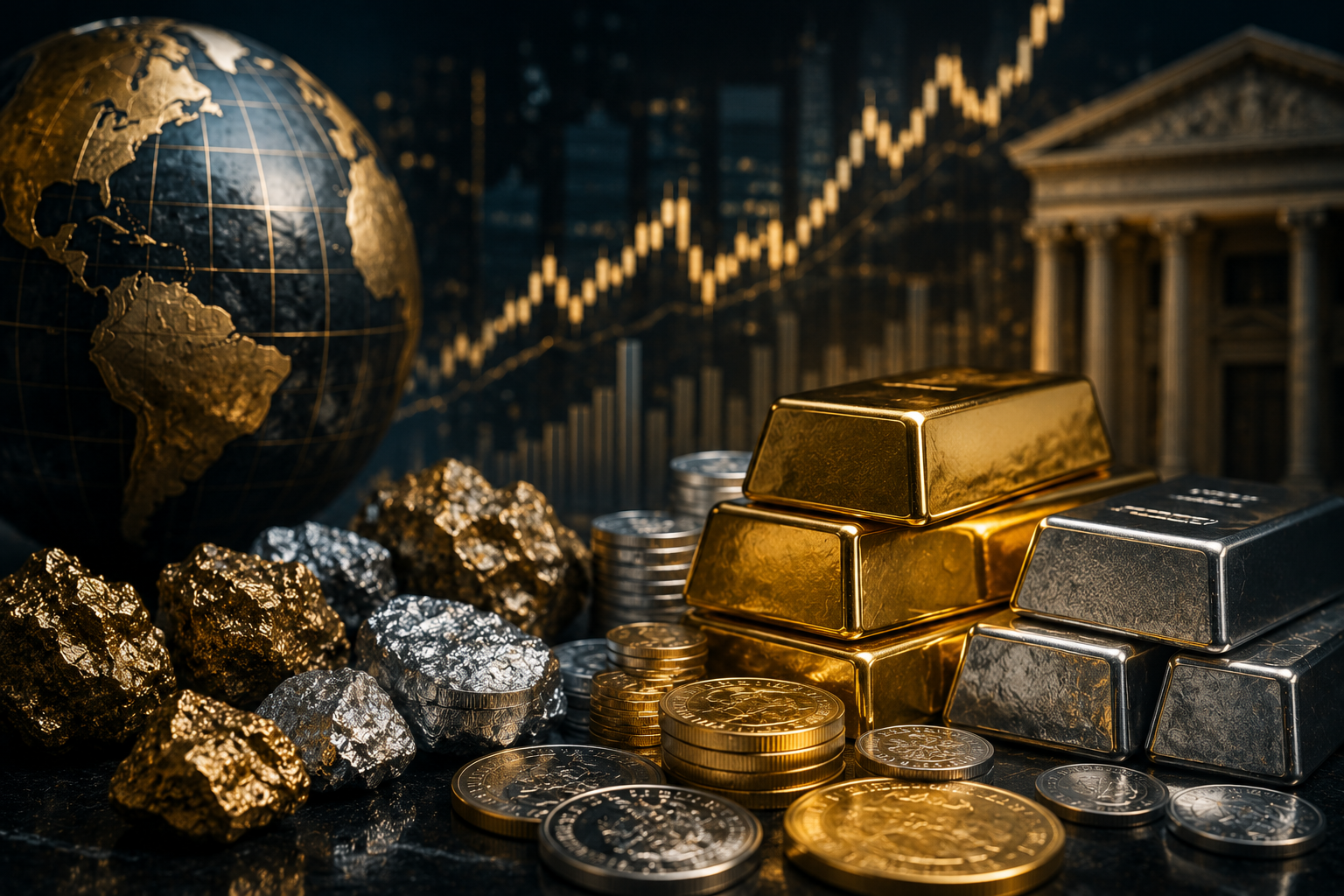
3.1 The Classic Model Still Applies — But Is No Longer the Only Driver The classic gold pricing model remains valid: when real yields rise and the US dollar strengthens, the opportunity cost of holding gold increases. However, in 2026, this relationship is n...
3. Interest Rates, ETF Flows and Gold's Multi-Layered Pricing
3.1 The Classic Model Still Applies — But Is No Longer the Only Driver The classic gold pricing model remains valid: when real yields rise and the US dollar strengthens, the opportunity cost of holding gold increases. However, in 2026, this relationship is no longer the only dominant driver. Recent reports from the World Gold Council and Reuters show that gold is simultaneously: • Pressured by higher rate expectations • Supported by official sector buying and geopolitical uncertainty As a result, price corrections in 2026 have looked more like "bull market pauses" rather than the beginning of a structural downtrend. 3.2 The Growing Role of ETF Positioning ETF flows have become increasingly important. The WGC reported that in June 2026, North American gold ETFs experienced significant outflows, which contributed to short-term price weakness. This highlights a critical point: gold is no longer driven solely by physical demand. Instead, it moves through a balance of: • ETF positioning • Central bank demand • Retail sentiment When all three layers are supportive, strong rallies occur. When one weakens, volatility increases sharply and corrections become more pronounced. 3.3 A Multi-Dimensional Asset Gold in 2026 is not a single-narrative asset. It functions simultaneously as a hedge, a reserve asset, a macro trade and a crisis instrument. This multi-dimensional nature means that professional analysis cannot rely on a single indicator such as CPI or Fed funds expectations. Instead, it requires a combined view of central bank behavior, ETF holdings, global risk geography and market positioning.

4. Silver: The Dual Asset Between Investment and Industry

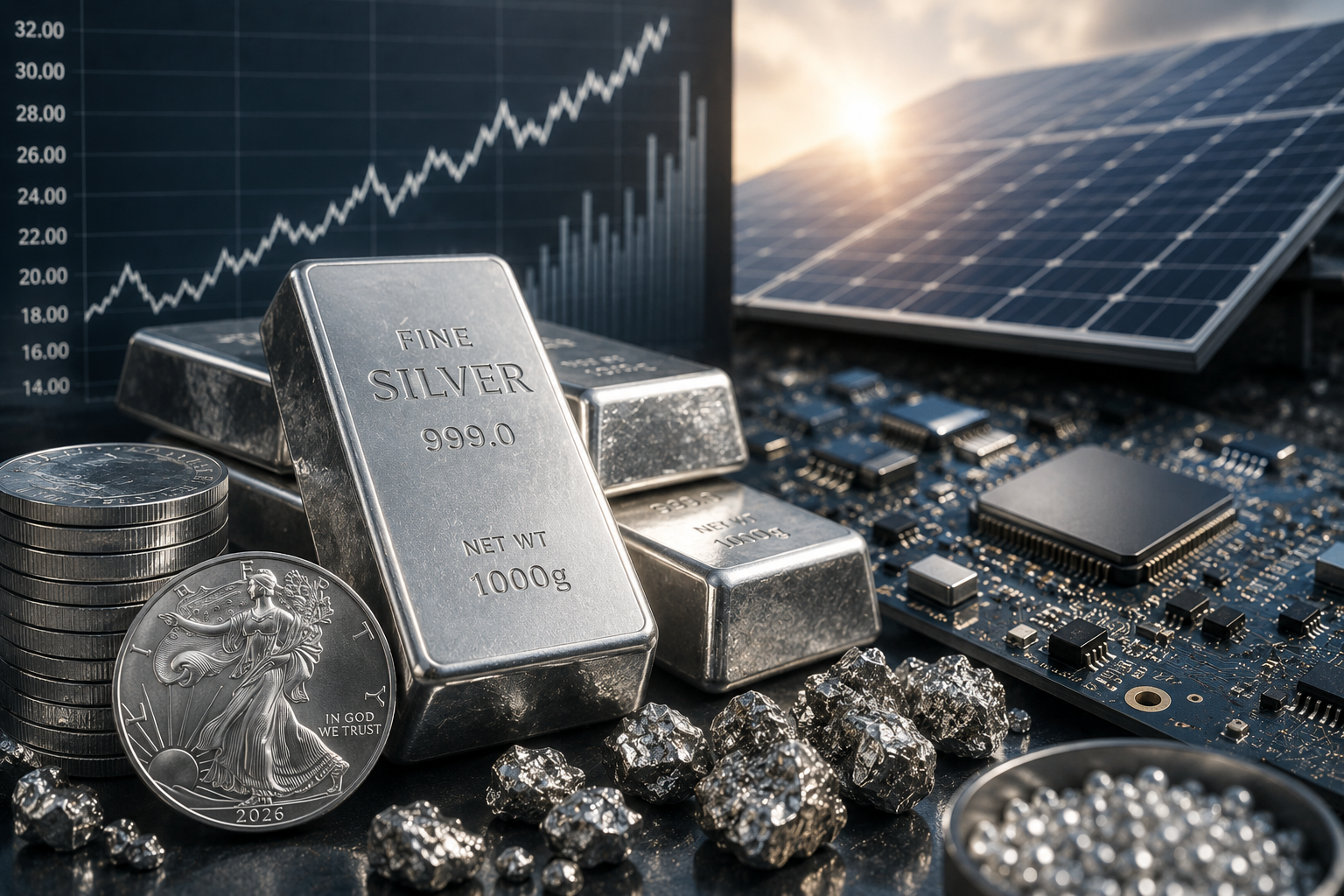
4.1 More Than a Smaller Version of Gold Silver in 2026 has once again proven that it is not simply a smaller version of gold. It is both a safe-haven asset and a highly cyclical industrial metal, with strong exposure to: • Electronics • Photovoltaics • Broa...
4. Silver: The Dual Asset Between Investment and Industry
4.1 More Than a Smaller Version of Gold Silver in 2026 has once again proven that it is not simply a smaller version of gold. It is both a safe-haven asset and a highly cyclical industrial metal, with strong exposure to: • Electronics • Photovoltaics • Broader technological infrastructure 4.2 Structural Deficit Persists Reuters reports that the Silver Institute expects the silver market to remain in structural deficit for the sixth consecutive year in 2026. While industrial demand may soften slightly, investment demand is expected to remain strong. This combination is crucial for price stability, as it allows investment flows to offset weakness in industrial consumption. 4.3 Price Behavior and Market Barometer Role In the first half of the year, silver surged alongside gold and then experienced a correction. The World Bank noted that silver reached new highs in Q1 2026 before giving back part of its gains, though the broader outlook still points to a strong year for precious metals overall. This suggests that silver has become more than ever a "market barometer": • When risk-on sentiment improves and the dollar weakens, silver tends to outperform gold • When real yields rise, its volatility increases more sharply 4.4 Why Silver Is Attractive to Market Participants This dual nature makes silver particularly attractive for market participants. Gold is primarily driven by reserve logic and macro anxiety, while silver is influenced not only by these factors but also by industrial cycles. Therefore, when investors discuss silver in 2026, they are effectively discussing both macroeconomic expectations and the direction of global industrial demand at the same time.

5. Platinum and Palladium: The Industrial Metals with Strategic Pricing Power

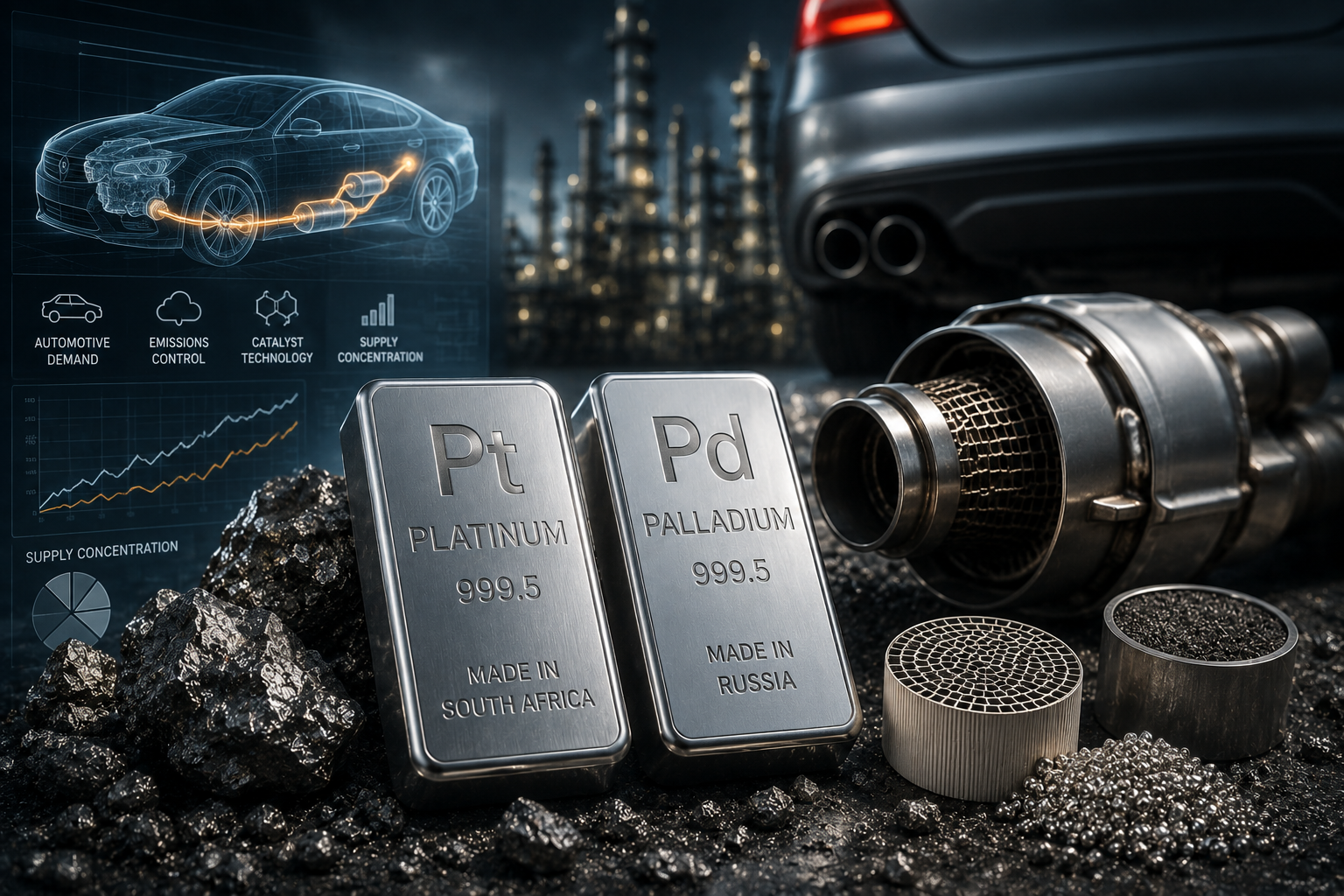
5.1 A Different Pricing Logic While gold and silver often dominate the discussion, platinum and palladium deserve separate attention in 2026 because they sit at the intersection of precious metals pricing and industrial end-use demand. Unlike gold, which is...
5. Platinum and Palladium: The Industrial Metals with Strategic Pricing Power
5.1 A Different Pricing Logic While gold and silver often dominate the discussion, platinum and palladium deserve separate attention in 2026 because they sit at the intersection of precious metals pricing and industrial end-use demand. Unlike gold, which is primarily driven by reserve allocation, and unlike silver, which has a dual investment-industrial profile, platinum and palladium are shaped much more directly by: • Automotive demand • Emissions technology • Catalyst consumption • Substitution dynamics • Supply concentration 5.2 Platinum: Industrial Input and Strategic Asset Platinum has increasingly attracted attention as the market continues to reassess its role in industrial applications and as a store of value within the precious metals complex. The metal remains deeply connected to automotive catalysts, hydrogen-related applications, chemical processing and jewelry demand, but it also benefits from periodic investment flows when investors search for relatively undervalued precious metals with tightening supply conditions. In such an environment, platinum is not simply a cyclical industrial input; it becomes a strategic asset that can reprice quickly when supply constraints or substitution trends intensify. 5.3 Palladium: Tied to the Automotive and Emissions Cycle Palladium remains highly sensitive to the health of the automotive sector and the broader regulatory landscape surrounding emissions control. Because palladium demand is concentrated in catalytic converter applications, the metal tends to respond sharply to changes in: • Vehicle production • Technological substitution • Expectations around internal combustion engine demand In 2026, this makes palladium especially important for traders and analysts who monitor downstream manufacturing trends, OEM procurement behavior and the balance between recycled supply and mined output. 5.4 A Broader Strategic Layer The broader significance of platinum and palladium in 2026 is that they remind the market that precious metals are not a single asset class with one pricing logic. Each metal has its own demand stack, its own liquidity profile and its own reaction function. For physical traders, industrial buyers and commodity investors alike, pricing must be assessed not only through macroeconomic indicators, but also through end-use consumption, supply geography, substitution risk and inventory tightness.

6. Outlook: A More Fragmented, More Opportunity-Rich Complex

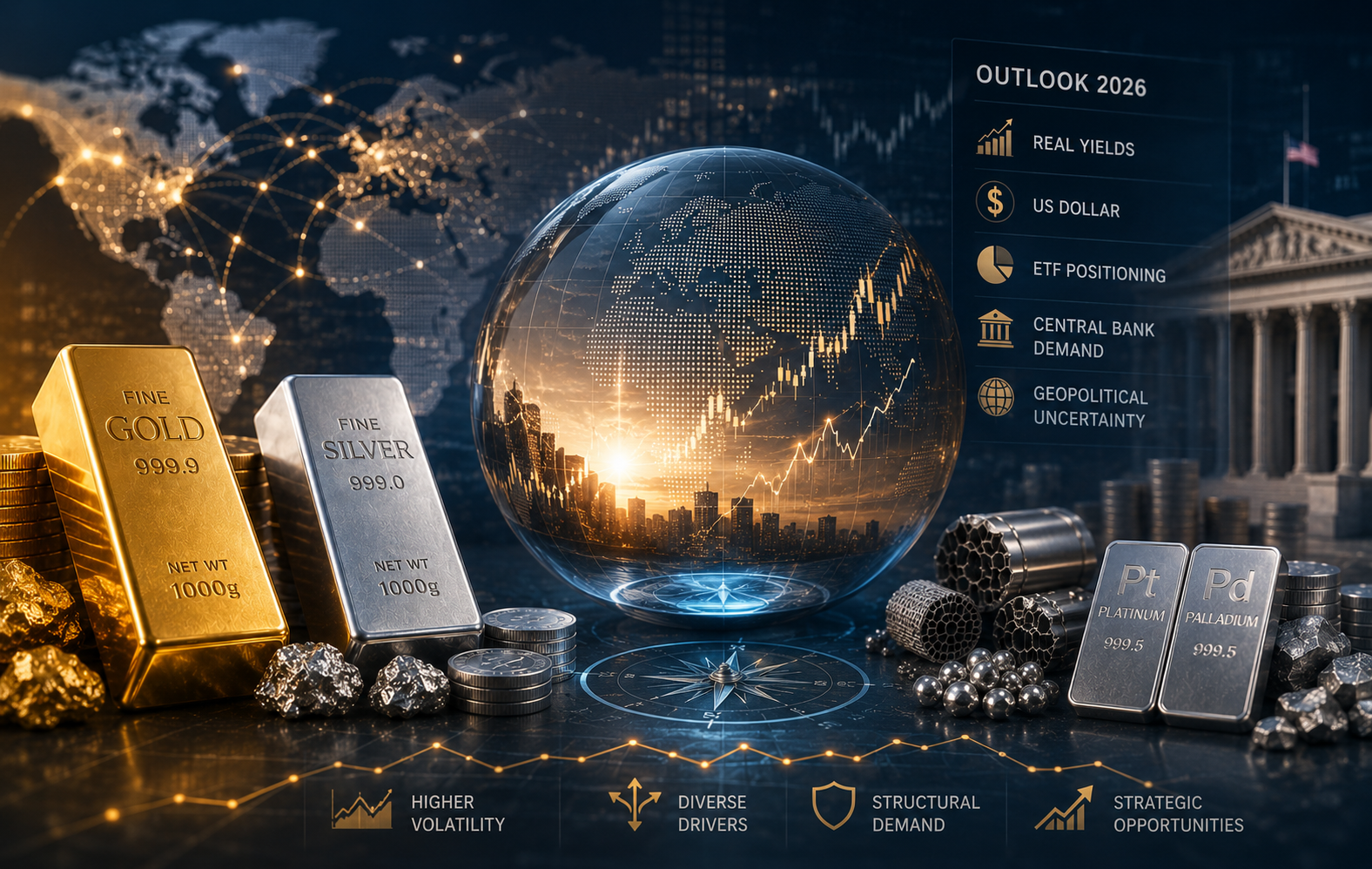
6.1 Gold and Silver Gold's near-term direction will continue to hinge on the interaction between real yields, the US dollar, ETF positioning and central bank demand. As long as official sector buying and geopolitical uncertainty remain in place, corrections ...
6. Outlook: A More Fragmented, More Opportunity-Rich Complex
6.1 Gold and Silver Gold's near-term direction will continue to hinge on the interaction between real yields, the US dollar, ETF positioning and central bank demand. As long as official sector buying and geopolitical uncertainty remain in place, corrections are more likely to resemble pauses within a broader uptrend than the start of a structural downturn. Silver is likely to keep tracking gold directionally while amplifying moves in both directions, given its added exposure to industrial demand and a persistent structural deficit. 6.2 Platinum and Palladium Platinum and palladium will remain more closely tied to automotive production, emissions regulation and substitution trends than to macro sentiment alone. Supply concentration and recycling flows will continue to be key swing factors for both metals. 6.3 A Market That Rewards Fundamental Understanding Taken together, the 2026 precious metals complex is more sophisticated and more fragmented than in prior cycles — and, for market participants who understand the underlying fundamentals, ultimately more opportunity-rich.

7. Strategic Considerations for Buyers and Traders

Successful participation in the precious metals market in 2026 requires more than tracking headline prices. Multi-Layered Monitoring Important indicators to track across the complex include: • Real yields and Federal Reserve expectations • Central bank pur...

7. Strategic Considerations for Buyers and Traders
Successful participation in the precious metals market in 2026 requires more than tracking headline prices. Multi-Layered Monitoring Important indicators to track across the complex include: • Real yields and Federal Reserve expectations • Central bank purchase trends • ETF flow data • Industrial demand indicators (electronics, photovoltaics, automotive) • Geopolitical risk developments Diversification Across the Complex Because gold, silver, platinum and palladium respond to different demand drivers, exposure across the complex — rather than a single metal — can help balance macro-driven and industrial-driven risk. Positioning for Volatility Given the wider trading ranges seen in 2026, buyers and traders should plan for higher volatility as a structural feature of the market, not a temporary anomaly, and build procurement or hedging strategies accordingly.

结论

Conclusion The precious metals market in 2026 has moved beyond a single "safe-haven" narrative into a multi-layered system shaped by monetary policy, central bank demand, ETF flows, geopolitical risk and industrial consumption. Gold remains the anchor of the complex, silver continues to bridge investment and industrial demand, and platinum and palladium add a distinct layer tied to automotive and emissions trends. While short-term price movements will continue to fluctuate within wider ranges, the structural drivers behind the 2026 rally — central bank accumulation, persistent silver deficits and industrial transformation — remain firmly in place. Golden Falcon Energy continues to monitor global precious metals markets and supply chain developments to support efficient and sustainable commodity trading solutions.

Need Reliable Access to Precious Metals Markets?

Contact Golden Falcon Energy to receive current market pricing, product specifications and shipment availability.

立即联系我们