
Golden Falcon Energy Logo
Global Urea Market Outlook 2026: Price Trends, Supply Dynamics and Future Forecast
Urea

Global Urea Market Outlook 2026: Price Trends, Supply Dynamics and Future Forecast

An industry analysis covering global urea price movements, production capacity, trade flows, market drivers and strategic procurement considerations.

July 17, 202612 min read
Executive Summary The global urea market has entered a new phase of adjustment following the extreme volatility experienced during the global energy crisis. Between 2022 and 2023, fertilizer markets were significantly disrupted by record-high natural gas prices, supply chain constraints and geopolitical uncertainty. Since then, the market has gradually moved toward a more balanced environment, although price volatility remains a key characteristic of international fertilizer trade. Urea prices during the period from 2025 to 2026 have been influenced by several competing forces. Lower energy costs and improved production availability have created downward pressure on prices, while export policies, agricultural demand cycles, geopolitical risks and logistics challenges have provided continued support. China’s export strategy, Middle Eastern production capacity, Russian fertilizer flows and demand from major agricultural economies such as India and Brazil remain among the most important factors shaping global market conditions. In the short term, urea prices are expected to remain sensitive to seasonal demand patterns and production economics. Medium-term market direction will depend on new capacity additions, global crop demand and the evolution of natural gas markets. Over the longer term, the fertilizer industry is expected to experience structural transformation driven by decarbonization initiatives, renewable energy integration and the development of low-carbon ammonia and urea production technologies. For buyers and traders, successful participation in the urea market increasingly requires supply diversification, market intelligence and proactive procurement strategies.

1. Global Urea Market Overview

1.1 The Strategic Importance of Urea in Global Agriculture Urea is the world’s most widely traded nitrogen fertilizer and plays a fundamental role in global agricultural productivity. Containing approximately 46% nitrogen by weight, urea provides one of the...


1. Global Urea Market Overview
1.1 The Strategic Importance of Urea in Global Agriculture Urea is the world’s most widely traded nitrogen fertilizer and plays a fundamental role in global agricultural productivity. Containing approximately 46% nitrogen by weight, urea provides one of the most concentrated and cost-effective sources of nitrogen available to farmers. Its high nutrient content, relatively easy handling characteristics and suitability for bulk transportation have made it the preferred nitrogen fertilizer in many agricultural markets. Global demand for urea is primarily driven by: • Grain production • Corn cultivation • Wheat farming • Rice production • Commercial agriculture expansion in emerging economies As global population growth continues and agricultural systems face increasing productivity requirements, nitrogen fertilizer demand remains strategically important for food security. However, urea production is highly energy-intensive. Natural gas represents the primary feedstock for ammonia production, which is the key intermediate material required for urea manufacturing. Therefore, global urea pricing is closely connected to: • Natural gas markets • Energy security • Industrial production costs • International trade policies 1.2 Major Global Urea Production Regions The global urea market is geographically concentrated among several major producing regions. China China represents one of the largest urea producers globally and plays a significant role in international price formation. Chinese export availability has historically influenced Asian and global markets. Changes in export policies, domestic fertilizer requirements and government measures to secure local agricultural supply can quickly affect international market balance. Middle East The Middle East maintains a strong competitive position in global urea production due to access to relatively low-cost natural gas. Major exporting countries include: • Saudi Arabia • Qatar • United Arab Emirates • Iran These producers benefit from large-scale ammonia and urea facilities designed primarily for export markets. Russia Russia has traditionally been one of the world’s major fertilizer exporters. Changes in trade routes, sanctions-related challenges and evolving logistics structures have influenced global fertilizer flows, creating opportunities and challenges for international buyers.

2. Urea Price Performance: Market Evolution from 2025 to 2026

2.1 Market Adjustment After the Energy Crisis The fertilizer market experienced exceptional disruption following the energy crisis that began in 2021 and intensified during 2022. European natural gas prices reached unprecedented levels, forcing several nitr...

2. Urea Price Performance: Market Evolution from 2025 to 2026
2.1 Market Adjustment After the Energy Crisis The fertilizer market experienced exceptional disruption following the energy crisis that began in 2021 and intensified during 2022. European natural gas prices reached unprecedented levels, forcing several nitrogen fertilizer producers to reduce production or temporarily suspend operations. As energy markets stabilized, production economics improved and additional supply became available. Key factors contributing to market normalization included: • Lower natural gas costs compared with crisis levels • Improved fertilizer production availability • Stabilization of global logistics networks • Reduced panic buying behavior This resulted in a gradual correction from previous price peaks. 2.2 Price Stabilization and Changing Demand Patterns During 2025 and into 2026, the urea market entered a period characterized by greater balance between supply and demand. However, prices remained influenced by several market variables: • Seasonal agricultural purchasing cycles • Government fertilizer procurement programs • Export availability from major producers • Freight market conditions • Regional inventory levels Markets such as India and Brazil continued to play a major role in supporting global demand. India, as one of the largest urea consumers worldwide, remains a particularly important market due to its large agricultural sector and government-supported fertilizer procurement system.

3. Main Factors Affecting Urea Prices

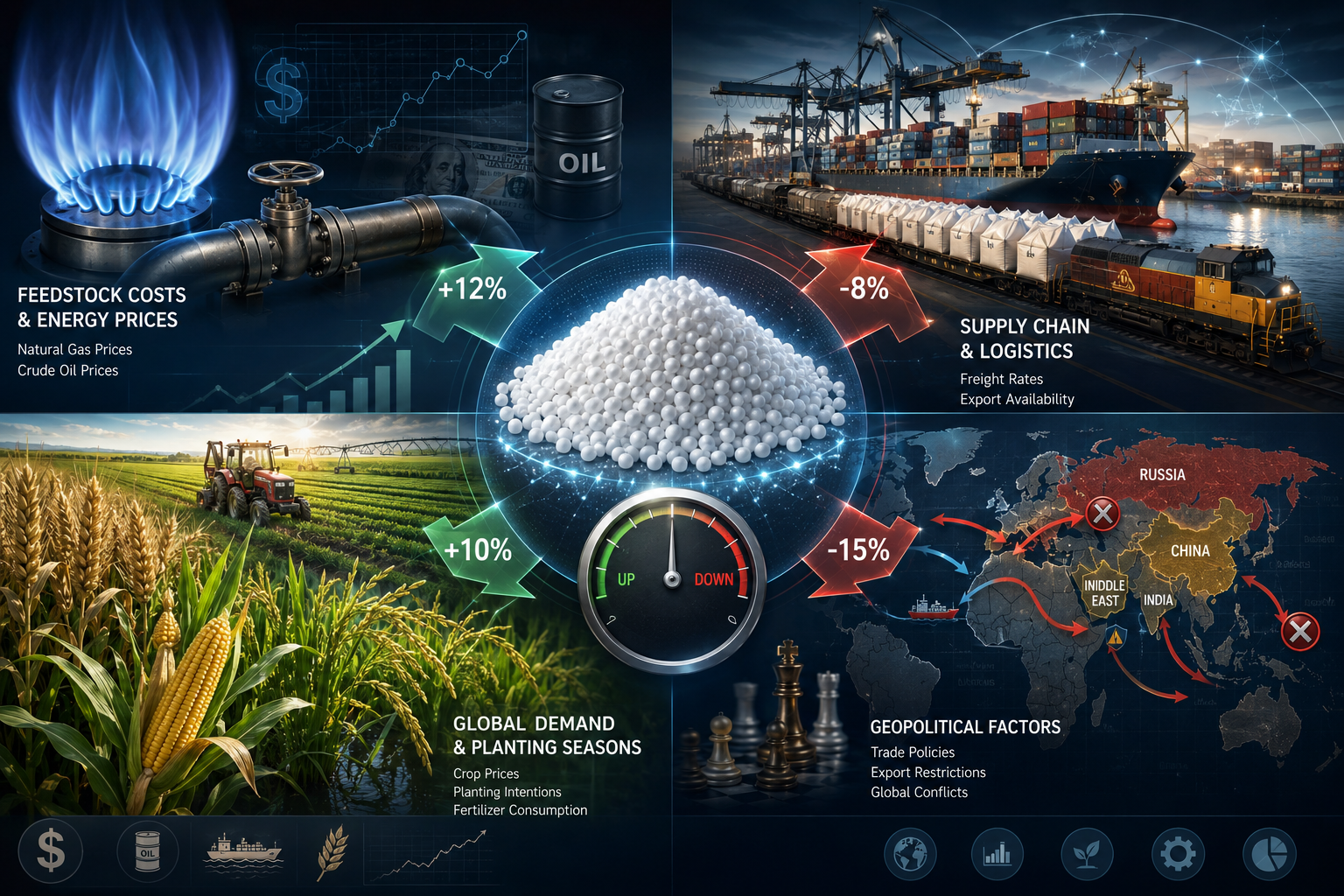
3.1 Natural Gas Prices and Production Economics GNatural gas remains the most important cost factor in nitrogen fertilizer production. The production chain can be summarized as: Natural Gas → Ammonia → Urea → Fertilizer Market Regions with reliable access...
3. Main Factors Affecting Urea Prices
3.1 Natural Gas Prices and Production Economics GNatural gas remains the most important cost factor in nitrogen fertilizer production. The production chain can be summarized as: Natural Gas → Ammonia → Urea → Fertilizer Market Regions with reliable access to affordable gas maintain a structural advantage in international competition. Middle Eastern producers, for example, benefit from long-term energy advantages, allowing them to remain competitive in export markets. Future movements in natural gas prices will continue to influence: • Production margins • Export competitiveness • Global urea price levels 3.2 China Export Policy and Global Supply Availability China’s export decisions remain one of the most closely monitored factors in the urea market. When Chinese exports increase, additional supply enters international markets and can pressure prices. When exports are restricted, global availability tightens and prices may increase. International buyers therefore closely monitor: • Export quotas • Domestic fertilizer demand • Government policies • Port availability 3.3 Agricultural Demand and Global Crop Cycles Urea demand is directly linked to agricultural performance. Strong crop economics generally support fertilizer purchasing, while weak commodity prices can reduce farmer purchasing activity. Important demand drivers include: • Corn planting cycles • Wheat production outlook • Rice cultivation trends • Agricultural commodity prices Emerging markets, particularly in Asia, Latin America and Africa, are expected to remain important growth areas for nitrogen fertilizer consumption.

4. Short-Term Urea Market Outlook (Next 3–6 Months)

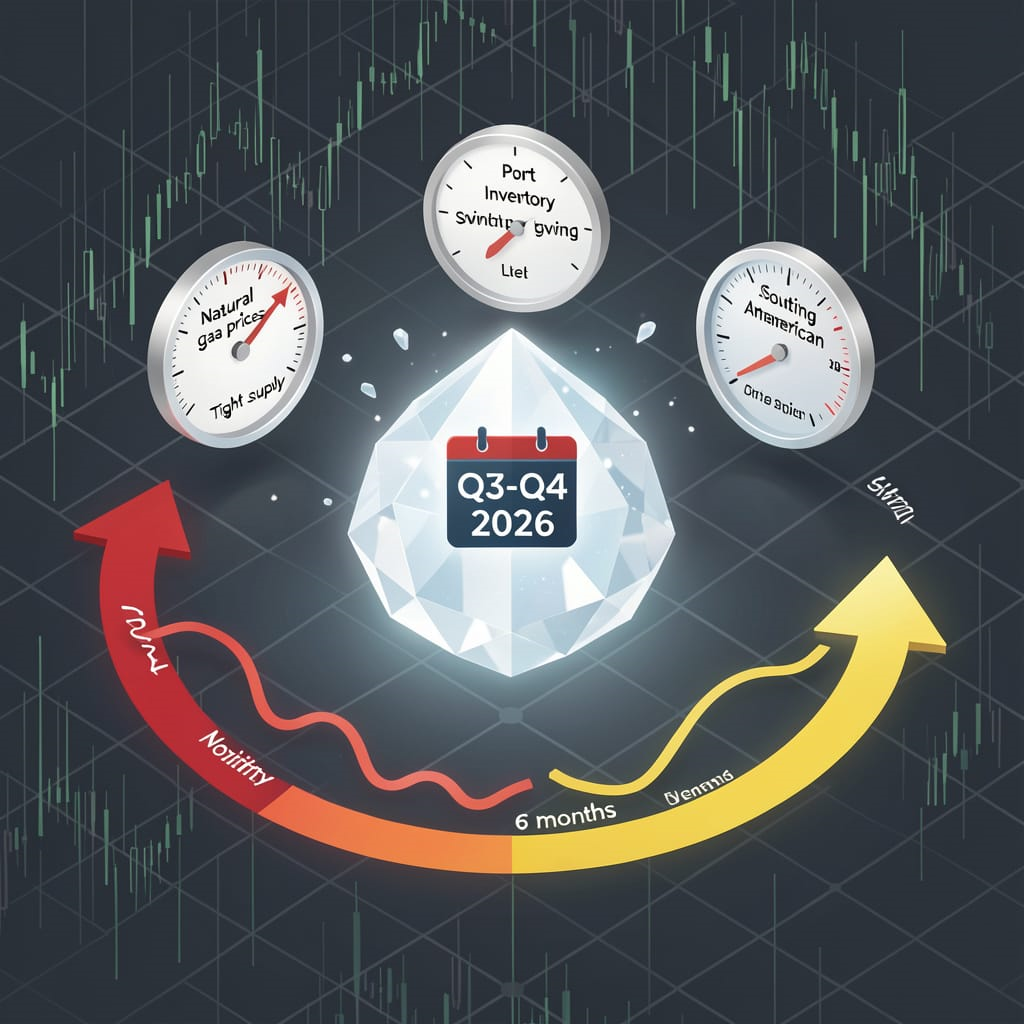
The short-term outlook suggests a market characterized by moderate volatility rather than extreme price movements. Base Scenario Under normal market conditions: • Supply remains adequate • Seasonal demand provides price support • Production costs remain ma...
4. Short-Term Urea Market Outlook (Next 3–6 Months)
The short-term outlook suggests a market characterized by moderate volatility rather than extreme price movements. Base Scenario Under normal market conditions: • Supply remains adequate • Seasonal demand provides price support • Production costs remain manageable Prices are expected to move within a relatively stable range. Potential Upside Risks Several factors could create upward price pressure: • Natural gas price increases • Unexpected production outages • Export restrictions • Geopolitical disruptions affecting logistics Potential Downside Risks Factors that could pressure prices include: • Weak agricultural demand • Higher global inventories • Increased export availability from major producers

5. Medium-Term Urea Market Outlook (2026–2028)

The medium-term market outlook will largely depend on the balance between new production capacity and global demand growth. Several trends are expected: Increasing Production Capacity New fertilizer projects, particularly in gas-rich regions, are expected ...

5. Medium-Term Urea Market Outlook (2026–2028)
The medium-term market outlook will largely depend on the balance between new production capacity and global demand growth. Several trends are expected: Increasing Production Capacity New fertilizer projects, particularly in gas-rich regions, are expected to increase global supply capability. Major producing regions with competitive energy resources are likely to strengthen their position in international markets. Changing Trade Flows Global fertilizer trade is expected to continue adapting to: • New logistics routes • Regional supply diversification • Changing regulatory environments Importers are increasingly seeking reliable suppliers rather than focusing only on short-term price advantages.

6. SLong-Term Urea Market Outlook

6.1 Transition Toward Low-Carbon Fertilizers The fertilizer industry is beginning a major transformation driven by climate policies and environmental requirements. Future developments include: • Green ammonia production • Renewable hydrogen integration • C...

6. SLong-Term Urea Market Outlook
6.1 Transition Toward Low-Carbon Fertilizers The fertilizer industry is beginning a major transformation driven by climate policies and environmental requirements. Future developments include: • Green ammonia production • Renewable hydrogen integration • Carbon capture technologies • Lower-emission fertilizer solutions While conventional urea will remain dominant for many years, environmental standards are expected to influence future production strategies. 6.2 The Future Competitive Landscape The long-term competitiveness of producers will increasingly depend on: • Energy efficiency • Carbon intensity • Technology investment • Access to renewable energy Countries with abundant energy resources and modern production facilities are expected to maintain important roles in global fertilizer supply.

7. trategic Considerations for Urea Buyers and Traders

Successful urea procurement requires more than price comparison. Professional buyers should evaluate: Supplier Diversification Relying on multiple origins reduces supply risks and improves negotiation flexibility. Market Monitoring Important indicators i...

Successful urea procurement requires more than price comparison. Professional buyers should evaluate: Supplier Diversification Relying on multiple origins reduces supply risks and improves negotiation flexibility. Market Monitoring Important indicators include: • Natural gas prices • Export policies • Freight rates • Agricultural demand trends Contract Strategy Long-term agreements can provide: • Supply security • Better planning • Reduced exposure to market volatility

结论

Conclusion The global urea market has moved from a period of extreme disruption toward a more balanced environment. However, the market remains highly sensitive to energy costs, trade policies, agricultural demand and geopolitical developments. While short-term price movements will continue to fluctuate, long-term fundamentals remain supported by global food demand and agricultural expansion. For international buyers and traders, success in the urea market will depend on reliable supply partnerships, accurate market intelligence and effective risk management strategies. Golden Falcon Energy continues to monitor global fertilizer markets and supply chain developments to support efficient and sustainable commodity trading solutions.

Need a Reliable Urea Supplier?

Contact Golden Falcon Energy to receive current market pricing, product specifications and shipment availability.

立即联系我们