

Golden Falcon Energy Logo
A Comprehensive Guide to Importing Granular Sulphur into International Markets
Sulphur

A Comprehensive Guide to Importing Granular Sulphur into International Markets

An authoritative industry guide covering sulphur specifications, quality control, logistics, regulatory requirements, trade finance and global market dynamics.

July 8, 2026•12 min read
Executive Summary The global sulphur market has experienced significant transformation in recent years, influenced by geopolitical developments, evolving supply chains, energy market volatility and changing international trade patterns. Granular sulphur remains one of the most widely traded forms of solid sulphur due to its excellent transportation characteristics, reduced dust generation and suitability for large-scale maritime shipment. This comprehensive guide provides international buyers, traders and industrial consumers with a practical framework for importing granular sulphur successfully. The report covers product specifications, supplier evaluation, quality inspection, logistics planning, regulatory requirements, contractual considerations and strategic sourcing approaches. Understanding the complete sulphur supply chain is essential for companies seeking reliable long-term supply relationships and competitive procurement advantages.

1. Selecting the Right Sulphur: Product Specification and Market Considerations

1.1 Understanding Granular Sulphur Specifications Successful sulphur import operations begin with clearly defined product specifications and quality requirements. Internationally traded granular sulphur typically follows strict industrial parameters: • Pur...

1. Selecting the Right Sulphur: Product Specification and Market Considerations
1.1 Understanding Granular Sulphur Specifications Successful sulphur import operations begin with clearly defined product specifications and quality requirements. Internationally traded granular sulphur typically follows strict industrial parameters: • Purity (dry basis): Minimum 99.5% • Ash Content: Maximum 0.05% • Moisture Content: Maximum 0.50% • Physical Form: Granules typically ranging from 1-5 mm Granular sulphur is preferred in international trade because of: • Improved handling efficiency • Reduced environmental impact during transportation • Lower dust generation • Better storage performance 1.2 Market Dynamics and Sourcing Strategy Global sulphur supply chains are influenced by refinery production, geopolitical conditions, shipping availability and regional demand patterns. Key factors affecting sourcing decisions include: 1. Export capacity of producing countries 2. Transportation routes and freight availability 3. Reliability of suppliers 4. Long-term contract structures A diversified sourcing strategy helps importers reduce supply risks and maintain operational continuity. 1.3 Regulatory Classification Granular sulphur is generally classified under: HS Code: 2503000000 "Sulphur of all kinds, other than sublimed sulphur, precipitated sulphur and colloidal sulphur." Importers must ensure correct classification because it impacts customs procedures, documentation requirements and transportation regulations.

2. Supplier Verification, Inspection and Quality Control

2.1 Pre-Shipment Quality Verification Selecting a reliable sulphur supplier requires a structured verification process. Professional buyers should evaluate: • Supplier experience in international commodity trading • Production origin and supply capability ...

2. Supplier Verification, Inspection and Quality Control
2.1 Pre-Shipment Quality Verification Selecting a reliable sulphur supplier requires a structured verification process. Professional buyers should evaluate: • Supplier experience in international commodity trading • Production origin and supply capability • Previous export history • Documentation standards • Quality assurance procedures Quality inspection is normally conducted through independent inspection companies before shipment. Common inspection procedures include: • Laboratory analysis • Purity verification • Moisture measurement • Quantity confirmation • Loading supervision Independent inspection provides confidence for both buyers and sellers and reduces commercial risks during international transactions. 2.2 Compliance Verification Protocol International sulphur transactions require careful compliance verification. Buyers should confirm: • Product specifications • Safety documentation • Export permissions • Import regulations • Transportation requirements A professional compliance process reduces delays, unexpected costs and operational risks. 2.3 Documentation Requirements Important commercial documentation normally includes: • Commercial Invoice • Packing List • Certificate of Origin • Certificate of Analysis (COA) • Bill of Lading • Inspection Certificate Accurate documentation is essential for customs clearance and successful international delivery.

3. International Shipping, Documentation and Logistics

3.1 Shipping Modes Granular sulphur is commonly transported through bulk maritime shipping channels. Successful shipment execution requires coordination between: • Supplier • Buyer • Shipping company • Inspection agency • Customs authorities • Financial in...

3. International Shipping, Documentation and Logistics
3.1 Shipping Modes Granular sulphur is commonly transported through bulk maritime shipping channels. Successful shipment execution requires coordination between: • Supplier • Buyer • Shipping company • Inspection agency • Customs authorities • Financial institutions Bulk vessels are commonly used for large-volume sulphur transportation due to efficiency and cost advantages. 3.2 Key Shipping Routes Major sulphur trading routes connect producing regions with industrial demand centres. Important export origins include: • Middle East • Canada • United States • Russia • Kazakhstan Major destination markets include: • China • India • Indonesia • Brazil • North Africa 3.3 Shipping Security Effective logistics planning requires consideration of: • Port infrastructure • Vessel availability • Weather conditions • Maritime regulations • Security procedures 3.4 Insurance and Risk Management International shipments should include appropriate insurance coverage. Risk management considerations include: • Cargo protection • Transportation risks • Delivery delays • Force majeure events A comprehensive logistics strategy protects both buyers and suppliers during international transactions.

4. Trade Finance, Pricing and Contract Structures

4.1 Pricing Mechanisms Sulphur pricing is influenced by several market factors including: • Regional supply and demand balance • Freight costs • Energy market conditions • Refinery production levels • Global fertilizer demand International sulphur transac...

4. Trade Finance, Pricing and Contract Structures
4.1 Pricing Mechanisms Sulphur pricing is influenced by several market factors including: • Regional supply and demand balance • Freight costs • Energy market conditions • Refinery production levels • Global fertilizer demand International sulphur transactions commonly use pricing references based on: • FOB pricing • CFR pricing • CIF pricing Understanding pricing mechanisms allows buyers to evaluate offers accurately and negotiate effectively. 4.2 Contract Essentials Professional sulphur contracts should clearly define: • Product specifications • Quantity and tolerance levels • Shipment schedule • Payment terms • Inspection procedures • Documentation requirements • Claims and dispute procedures Long-term supply agreements can provide greater stability in volatile commodity markets. 4.3 Tariff Considerations Importers must evaluate: • Customs classification • Import duties • Local regulations • Tax obligations • Documentation requirements Correct tariff planning helps avoid unexpected costs and shipment delays.

5. Global Sulphur Demand and Destination Markets

Sulphur demand is primarily driven by fertilizer production, particularly phosphoric acid and sulphuric acid manufacturing. Major consumption sectors include: • Agriculture fertilizers • Mining operations • Chemical industries • Industrial processing Key ...
5. Global Sulphur Demand and Destination Markets
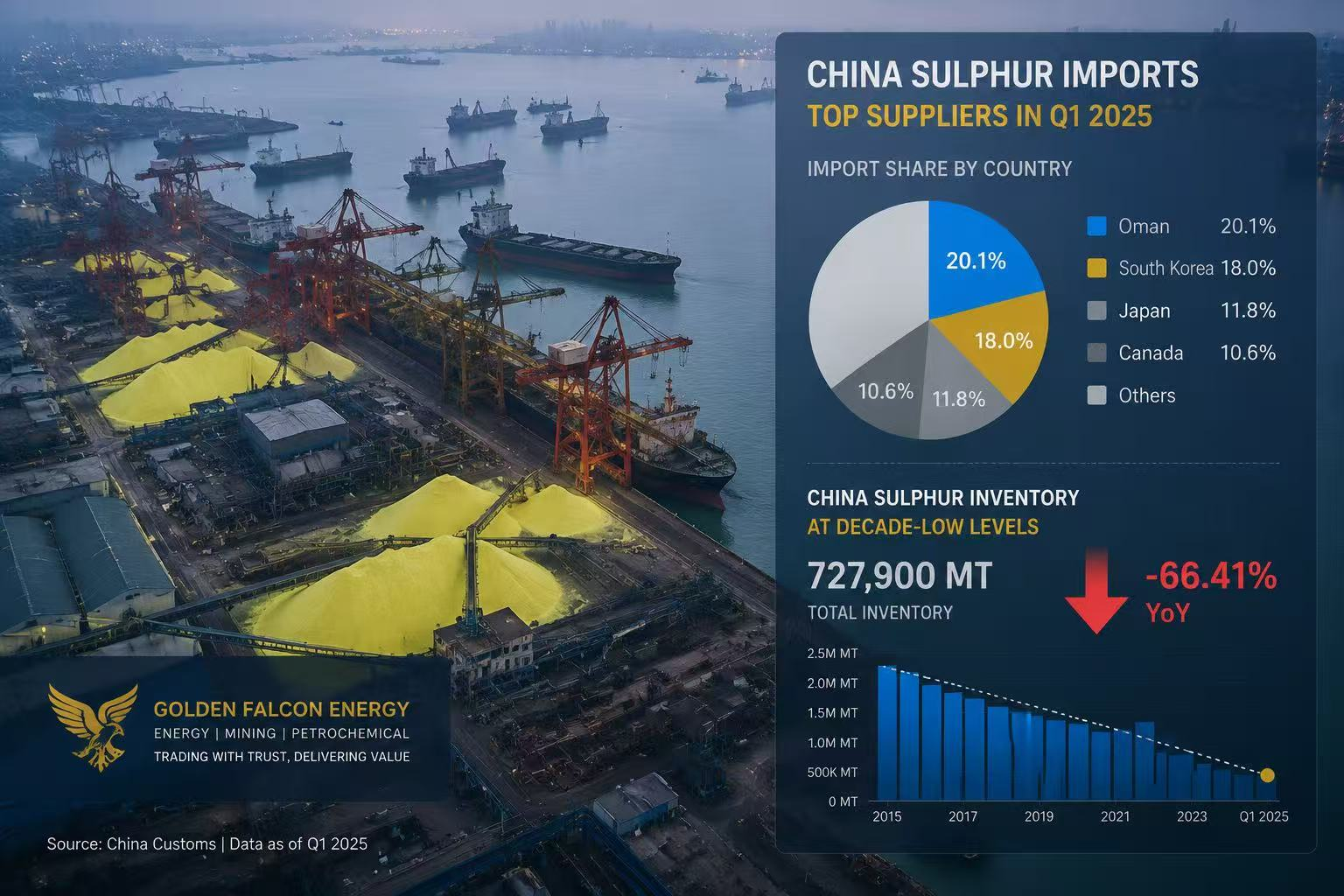
Sulphur demand is primarily driven by fertilizer production, particularly phosphoric acid and sulphuric acid manufacturing. Major consumption sectors include: • Agriculture fertilizers • Mining operations • Chemical industries • Industrial processing Key destination markets continue to expand due to agricultural growth and increasing fertilizer requirements. China, India, Southeast Asia and Brazil represent some of the most important sulphur-consuming regions globally. Understanding destination market dynamics enables exporters and traders to develop more effective supply strategies.

6. Supply Chain Resilience and Strategic Sourcing

Modern sulphur trading requires a resilient and adaptable supply chain approach. Companies should focus on: • Supplier diversification • Reliable logistics partnerships • Market intelligence • Risk management strategies • Long-term commercial relationships ...
6. Supply Chain Resilience and Strategic Sourcing
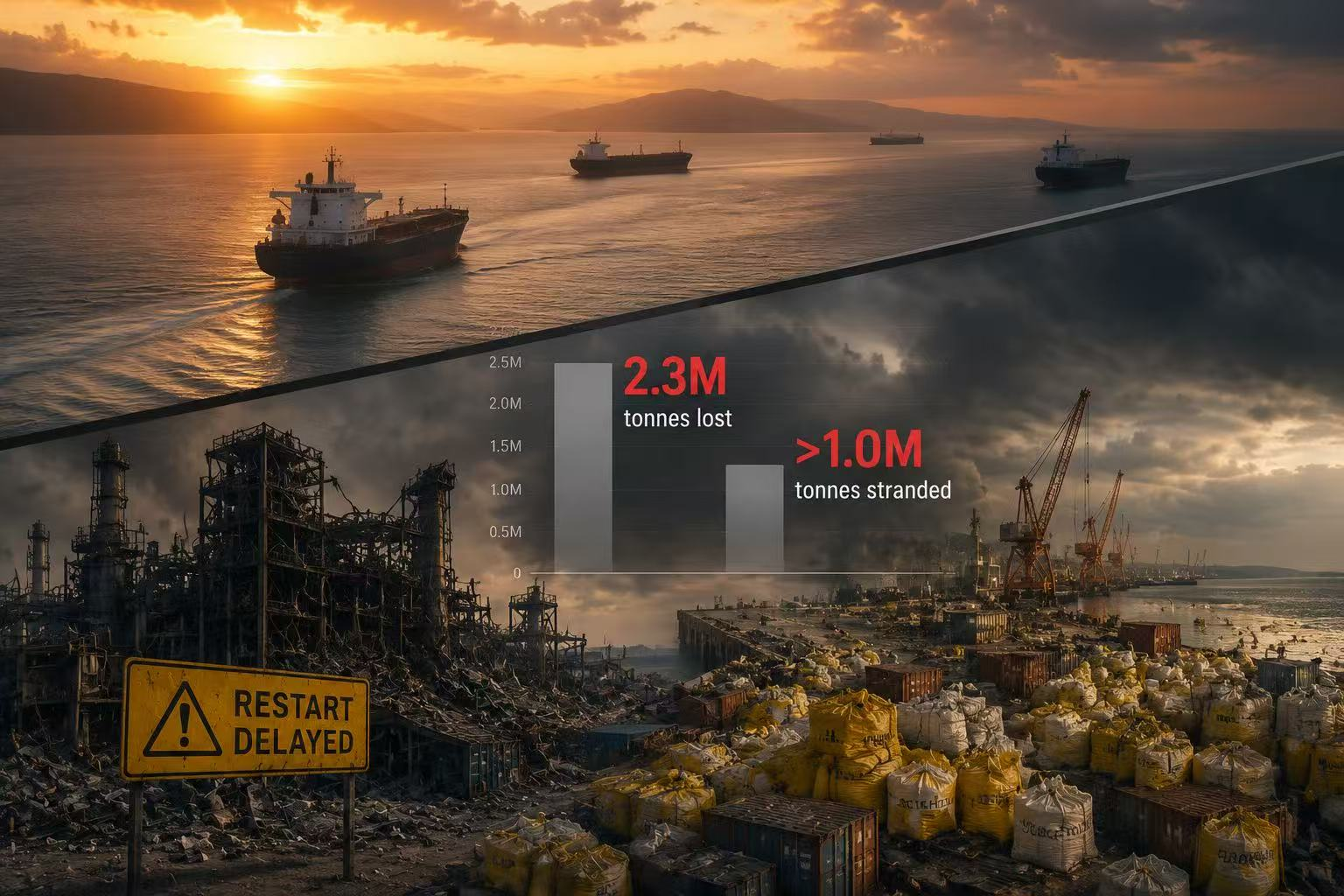
Modern sulphur trading requires a resilient and adaptable supply chain approach. Companies should focus on: • Supplier diversification • Reliable logistics partnerships • Market intelligence • Risk management strategies • Long-term commercial relationships Supply chain resilience has become increasingly important due to geopolitical uncertainty, transportation disruptions and changing global trade conditions. Successful sulphur import operations are built on transparency, technical knowledge and strong international partnerships.

Conclusion

Conclusion Importing granular sulphur requires more than identifying a supplier. Successful international transactions depend on accurate product specifications, supplier verification, quality control, logistics management and professional contract execution. Golden Falcon Energy supports international commodity trading activities by connecting reliable supply sources with global buyers through transparent processes and structured trade practices. Companies seeking stable sulphur supply solutions should prioritize long-term partnerships, technical verification and efficient supply chain management.

Need a Reliable Sulphur Supplier?

Contact Golden Falcon Energy to receive current market pricing, product specifications and shipment availability.

Contact Us Now